Best Christian Documentaries Reviewed & Rated
Documentaries present themselves as truth — making theological accuracy even more critical. TheoScope reviews Christian and faith-adjacent documentaries for doctrinal soundness, worldview integrity, and factual reliability.
- Worldview72
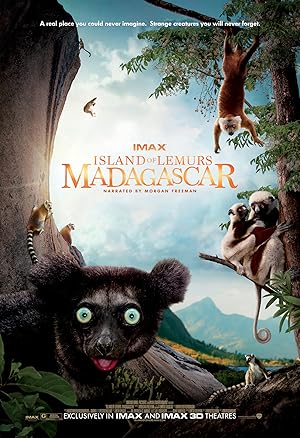
The film affirms genuine human virtues — dedication, sacrifice, wonder, and stewardship — through the life and work of scientist Patricia Wright, who devotes her career to protecting endangered lemurs in Madagascar. The documentary celebrates the beauty and complexity of the natural world in a way that easily invites wonder at creation, even if it never explicitly points to a Creator. The film operates from an evolutionary framework, presenting lemurs as having 'arrived' in Madagascar millions of years ago and evolved into diverse species — a worldview assumption that Christian families will want to address in conversation. However, the core values on display (care for creation, perseverance, compassion) are broadly consistent with a biblical call to stewardship. There is no moral relativism, no celebration of sin, and no anti-human messaging — the film genuinely honors both the creatures and the people working to protect them. The secular environmental framework is the primary concern rather than anything actively hostile to a Christian worldview.
Content95This is an exceptionally clean documentary with essentially no objectionable content. There is no violence, no sexual content, no profanity, and no adult themes of any kind. The film's IMAX footage depicts lemurs in their natural habitat, including some mild depictions of the challenges animals face in the wild (habitat loss, endangered species), but nothing graphic or disturbing. A brief sequence showing deforestation may be mildly sobering for very young children but is presented factually and without exploitation. This is as family-safe as documentary filmmaking gets.
Moral Framework78The film presents a clear moral framework around responsibility and care: human activity (deforestation) is identified as a genuine threat to lemurs, and this is treated as something worth correcting — not morally neutral. Patricia Wright is presented as a heroic figure whose sacrifice and dedication are rewarded with real conservation results, modeling that perseverance in doing good matters. The 'villains' of the story are structural (poverty, deforestation, habitat loss) rather than personal, which softens moral clarity somewhat but avoids cheap moralizing. The film leaves audiences with a sense that human choices carry weight and that individuals can make a meaningful difference, which is a coherent and positive moral vision. There is no nihilism, no moral relativism, and no celebration of harmful behavior.
Theological52The film makes no reference to faith, God, prayer, or Christianity — it is a secular nature documentary in the mainstream IMAX tradition. The sense of awe and wonder it evokes at Madagascar's biodiversity could naturally open a conversation about the Creator behind the creation, but the film itself does not make that connection. The evolutionary framework is assumed throughout as the explanatory lens for lemur diversity and adaptation, which is the primary theological concern for Christian families. There are no anti-Christian elements, no occult themes, and no mockery of faith — the film is simply silent on spiritual matters. Parents who hold a young-earth or intelligent design perspective will need to be prepared to supplement the film's scientific framing with their own theological commentary.
Island of Lemurs: Madagascar is a visually stunning, entirely wholesome IMAX documentary appropriate for nearly all ages. Its primary concern for Christian families is its uncritical evolutionary framework and the complete absence of any spiritual or theological dimension, not any moral or content problem. It is an excellent opportunity to discuss creation stewardship and the wonder of God's handiwork.
⚠ Mature ThemesFull review →77/100 - 2🎞️Poor19Worldview22
This documentary examines the cultural phenomenon of Fifty Shades of Grey, a novel built around BDSM sexual dynamics, emotional manipulation, and the romanticization of a controlling relationship. By treating the book's phenomenal success as a subject worthy of exploration and, by most accounts of this production, celebration, the film implicitly affirms the values embedded in the source material. The relationship at the center of the novel — an older, controlling man and a naive young woman — models dominance and submission as erotic rather than dangerous, which stands in direct opposition to the biblical view of human dignity, mutual self-giving love, and the covenant nature of sexuality. Documentaries of this type tend to normalize or glamorize rather than critique, and there is no indication this film offers a countervailing biblical or even secular ethical corrective. The worldview advanced is one of expressive individualism where sexual appetite is the highest good and cultural popularity confers moral legitimacy.
Content18As a documentary about Fifty Shades of Grey — a book whose explicit content is its defining characteristic — this film almost certainly includes extended discussion, reading, and dramatic re-enactment of sexually explicit material from the novel. The title itself ('Sex Story') and the casting of a drama element alongside the documentary format suggests dramatized scenes likely depicting or referencing BDSM practices, sexual acts, and sexually charged scenarios. Even if no explicit intercourse is shown on screen, the prolonged glorification and normalization of the novel's sexual content constitutes a significant content concern. The documentary framework does not sanitize the material; it exists specifically to give that material wider exposure and cultural legitimacy. Applying hard demerits for prolonged glorification of exploitative sexual content and likely graphic sexual discussion and re-enactment, this film earns a very low content score.
Moral Framework20The moral framework of this documentary is functionally absent or actively inverted. By framing the success of Fifty Shades of Grey as a cultural phenomenon worth celebrating or at minimum uncritically examining, the film confers approval on a narrative where manipulation, coercion, and psychological control are presented as romantic. The novel's protagonist is a young woman pressured by a powerful older man into a sexual contract — a dynamic that in any other frame would be recognized as abuse. There is no evidence this documentary interrogates that dynamic from a moral standpoint. Consequences for harmful behavior are not modeled; instead, the film participates in the cultural laundering of the source material's ethics.
Theological15Faith and Christian theology are entirely absent from this documentary as meaningful categories. The biblical view of sexuality — as a sacred, covenantal act between husband and wife reflecting the love of Christ for the Church — is not invoked, referenced, or respected. The entire premise of the documentary treats sexuality as a commodity and a spectacle, which is antithetical to a theological understanding of human embodiment and dignity. To the extent any 'spirituality' is present, it is the secular religion of cultural trendiness and liberated desire. There are no redemptive themes, no grace, no transcendence — only the affirmation of appetite.
This documentary examines the cultural success of the explicitly sexual novel Fifty Shades of Grey, and by its own framing participates in normalizing and celebrating that content. It offers no meaningful moral, theological, or critical counterweight. It lands as one of the least appropriate films a Christian family could watch together, at any age.
⚠ Sexual Content⚠ Mature Themes⚠ NudityFull review →19/100
Frequently asked questions
What is the best Christian documentary?
Island of Lemurs: Madagascar (2014) is TheoScope's top-rated documentary for Christians with a score of 77/100, evaluated for theological accuracy, worldview, and content quality.
Are Christian documentaries theologically reliable?
Island of Lemurs: Madagascar scored highest for theological soundness among documentaries reviewed by TheoScope. Documentary quality and doctrinal accuracy vary widely — always check full profiles.
What documentaries are recommended for Christian study?
TheoScope rates Island of Lemurs: Madagascar (2014) at 77/100 as the top documentary for Christian viewing and study, based on theological soundness and worldview alignment.
Browse other categories
See full scores, content flags & more
Free to browse. Sign up to unlock complete score breakdowns and the full TheoScope library.