Best Action & Adventure Movies for Christians
Action films communicate values through heroes, justice, sacrifice, and what violence means — subtly shaping a moral universe. TheoScope scores popular action and adventure films for worldview, moral framework, and content so Christian viewers can engage with clear eyes.
- Worldview82
How to Train Your Dragon affirms deeply positive values: courage in the face of cultural pressure, empathy toward those who are misunderstood, and the willingness to question inherited prejudices. Hiccup's choice to spare Toothless rather than kill him — at great personal risk — is the moral hinge of the entire film, and it is rewarded rather than punished. The story challenges tribalism and fear-based hatred without descending into moral relativism; the Vikings were wrong about dragons, and the film makes that clear without excusing the harm done. Relationships built on trust and mutual vulnerability are held up as the foundation of genuine community. The value of being different, of thinking rather than fighting, is affirmed without mocking those who value tradition or strength — Stoick's arc shows that even well-meaning leaders can be blind and must grow. Overall the film advances a worldview rooted in goodness, truth, and the courage to act on what you know to be right.
Content78As a live-action PG film, the content is generally family-appropriate with some notable action intensity. Dragon attacks feature fire, destruction, and Viking combat — figures are thrown, structures collapse, and there is genuine peril — but no blood or gore. A significant story beat involves a character losing a limb, shown in consequence rather than graphically depicted. There is no sexual content or nudity, and romantic elements between Hiccup and Astrid are mild and age-appropriate. Language is clean throughout, consistent with a PG rating. Some scenes involving large, aggressive dragons and fire-based combat may be frightening for very young children, and the emotional weight of a father-son conflict and physical danger is real but handled with care.
Moral Framework85The film presents a coherent and admirable moral order: prejudice and fear lead to destruction, while empathy and courage lead to flourishing. Hiccup's virtue — his refusal to kill, his patience in building trust, his intellectual honesty — is consistently rewarded, culminating in communal transformation. The Vikings' aggression toward dragons is not celebrated but ultimately shown to be rooted in a false narrative, and they are called to change — a meaningful moral correction rather than simple villainy. Stoick the Vast, who represents tradition and strength, goes through a genuine arc of humility and repentance toward his son, modeling the kind of moral growth the film values. Sacrifice is honored: characters bear real cost for doing what is right. The film leaves audiences with a clear sense that truth matters, that kindness is stronger than cruelty, and that changing your mind in the face of evidence is a form of courage, not weakness.
Theological60The film operates in a Norse Viking setting, and its spiritual backdrop is implicitly pagan — Odin and Viking mythology form the cultural wallpaper without being actively promoted or celebrated. There is no Christian faith portrayed, no prayer, and no reference to a personal God. However, the film is rich with themes that resonate deeply with Christian sensibility: the outcast who sees what others cannot, the power of mercy over judgment, reconciliation between estranged father and son, and the idea that love requires vulnerability. None of these themes are framed in explicitly Christian terms, but they are not hostile to faith either. Parents can draw significant theological connections in conversation, particularly around Hiccup's act of mercy mirroring grace, and the prodigal-son-like restoration between Stoick and Hiccup.
How to Train Your Dragon (2025) is a live-action reimagining of the beloved animated story, faithful in spirit to its themes of empathy, courage, and cross-cultural reconciliation. It is a genuinely well-crafted adventure film with strong moral vision and no significant objectionable content. Younger children may find the dragon battles and emotional intensity challenging, but families with children ages 8 and up should find this a rich and rewarding shared experience.
⚠ Violence⚠ Frightening Scenes⚠ Mature ThemesFull review →78/100 - 2
 Excellent78Worldview82
Star Wars: A New Hope presents a strongly positive worldview built around courage, self-sacrifice, loyalty, and the triumph of good over evil. The Rebel Alliance fights against tyranny and oppression, and the film never blurs the line between the heroic and the villainous — Darth Vader is presented as genuinely evil, not merely misguided. Luke's journey involves setting aside self-interest for the sake of others, culminating in a climactic act of faith and trust rather than cold calculation. Han Solo's arc from mercenary self-interest to sacrificial loyalty reinforces the value of community over individualism. The film affirms human dignity and freedom as worth fighting for. The one secular concern is the Force, a pantheistic spiritual energy that substitutes for a personal God, which introduces a worldview element parents should be aware of.
Content78For a 1977 PG film, the content is quite mild by modern standards. Violence is present but largely bloodless — stormtroopers are shot, Obi-Wan is struck down by a lightsaber, and Alderaan is destroyed by the Death Star, but none of this is graphically depicted. The cantina scene includes alien creatures and a brief moment of dismemberment (an arm severed) that is shown quickly and without gore. There is no sexual content, though Princess Leia's white dress is somewhat form-fitting; no nudity is present. Language is very mild — a few mild exclamations with nothing stronger. There is no drug or alcohol use of concern. The film earns its PG comfortably and would likely be a soft PG by current MPAA standards.
Moral Framework84The film presents a clear and coherent moral order in which virtue is rewarded and evil is punished. The Empire's cruelty — the destruction of an entire planet, the murder of Luke's aunt and uncle — is presented as genuinely monstrous and never romanticized. Luke's obedience to Obi-Wan's guidance and his willingness to trust beyond his own understanding leads directly to the film's triumphant conclusion. Han Solo's selfishness is gently judged throughout the narrative, and his return at the climax is the film's moral payoff — suggesting that loyalty and sacrifice are the higher call. The villain faces no redemption here, and the heroes are rewarded with honor, medals, and restored hope. The film's moral vision is straightforward and deeply satisfying.
Theological58The film's primary spiritual element is 'the Force,' described as an energy field binding all living things — a concept drawn from Eastern mysticism, Taoism, and pantheism rather than Christian theology. While the Force functions narratively as a stand-in for divine guidance and transcendence, it is explicitly impersonal and rooted in the created order rather than in a personal Creator God. Obi-Wan Kenobi functions almost as a spiritual mentor and martyr figure, and his sacrificial death followed by a continued spiritual presence has faint resonances with Christian themes without being intentionally so. Prayer, the church, and Christianity are entirely absent from the film's universe. On balance, the Force introduces a theologically mixed framework — it encourages reliance on something beyond oneself, which can be a useful conversation starter, but it is not a Christian concept and parents should be prepared to discuss the difference.
Star Wars: A New Hope is a classic adventure film with a clear moral framework, heroic values, and a satisfying good-vs.-evil narrative that has resonated across generations. Its spiritual content is drawn from Eastern mysticism rather than Christianity, which warrants a conversation but does not undermine the film's broadly positive values. It remains one of the most family-appropriate major films in the action-adventure genre and a genuine cultural touchstone.
⚠ Violence⚠ Frightening Scenes⚠ Mature ThemesFull review →78/100 - 3
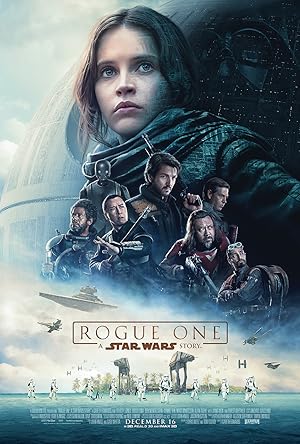 Excellent76Worldview82
Rogue One presents a fundamentally hopeful worldview centered on sacrifice, courage, and the conviction that ordinary people can stand against overwhelming evil. The film's core thesis — that hope is worth dying for — affirms human dignity and the moral weight of resistance against tyranny. The Empire is portrayed as unambiguously evil, with the Death Star's mass destruction of Jedha City functioning as a clear analog for totalitarian genocide. The Rebel characters are flawed but genuinely motivated by love and justice rather than self-interest, which elevates the film above typical action fare. The ending, in which every member of Rogue One dies for a cause they believe in, avoids sentimentality while honoring genuine sacrificial virtue. There are no meaningful anti-Christian or relativistic values — the worldview is broadly Judeo-Christian in its moral structure even if not explicitly so.
Content65The film carries significant battle violence throughout, including large-scale warfare, blaster combat, hand-to-hand fighting, and the disturbing mass-casualty destruction of Jedha City and later Scarif by the Death Star's partial discharge — the latter depicted with an almost nuclear horror. A character is subjected to a disturbing mind-probe torture scene involving a tentacled creature, which is brief but unsettling. There is no sexual content, nudity, or romantic physical contact beyond a brief emotional embrace. Language is mild by PG-13 standards with no strong profanity. A character is briefly seen drinking in a cantina context. The cumulative intensity of combat violence and the emotionally heavy deaths of every major protagonist make this firmly mid-range PG-13 in content terms.
Moral Framework84Rogue One operates with an unusually coherent moral order for a blockbuster action film. Vice and imperial cruelty are never glorified — Director Krennic's ambition and cruelty are exposed as hollow and pathetic, while Tarkin's cold calculation of mass murder is portrayed with appropriate horror. The film does wrestle with moral ambiguity: Cassian Andor confesses to having done 'terrible things' for the Rebellion, and the Alliance leadership itself is shown as politically cowardly — morally complicated without endorsing those compromises. Jyn Erso's arc moves from cynical self-preservation to selfless sacrifice, and this transformation is treated as genuinely virtuous and not naive. The deaths of the protagonists serve as a moral statement — that the righteous suffer and may die without earthly reward, but their acts of faithfulness carry lasting consequence. This is a morally serious film that earns its weight.
Theological72The Force in the Star Wars universe functions as a vague spiritual stand-in — not Christianity, but not hostile to transcendent belief either. Chirrut Îmwe, a blind warrior-monk, is the film's most explicitly spiritual character, and he is portrayed with genuine reverence and dignity. His repeated mantra, 'I am one with the Force, and the Force is with me,' reads as a form of meditative faith-prayer, and the film treats his trust in a higher power as neither foolish nor coincidental — his death scene in particular has a martyr's quality. This spirituality is syncretistic and not biblically grounded, but it is respectful of the idea of providence, transcendence, and dying in faith. Christian parents should note this is Eastern-leaning cosmic spirituality, not gospel truth, but it creates natural conversation about what it actually means to trust God rather than a vague cosmic energy.
Rogue One is the darkest and most morally serious entry in the Star Wars franchise, functioning less as a space adventure and more as a war film about sacrifice, hope, and the cost of resistance. It lands in an unusual place theologically — spiritually curious without being explicitly Christian, and morally weighted without being nihilistic. It is not a film for young children, but for older teens and adults it offers genuine substance worth engaging.
⚠ Violence⚠ Frightening Scenes⚠ Mature Themes⚠ Drug/Alcohol UseFull review →76/100 - 4
 Good74Worldview78
Project Hail Mary affirms deeply positive values: self-sacrifice for the good of humanity, intellectual curiosity as a gift, and the extraordinary power of friendship and cooperation across profound difference. Ryland Grace's willingness to give his life for Earth — a mission he ultimately chose — reflects a worldview where duty, love, and courage matter more than personal survival. The unexpected friendship between Grace and the alien Rocky is the film's moral and emotional center, presenting cross-cultural (and cross-species) empathy as a virtue. The film does operate largely within a secular humanist framework — humanity saves itself through science and ingenuity — without explicit acknowledgment of God or a transcendent moral order. However, the values it celebrates (sacrifice, loyalty, courage, wonder, love of truth) are consonant with a biblical understanding of human dignity and virtue, even if the source of those values is left unexamined. There are no genuinely destructive values celebrated, and the film's vision of human flourishing is fundamentally hopeful rather than nihilistic.
Content75Project Hail Mary carries a PG-13 rating and largely earns it without pushing aggressively against its limits. Violence is present but not graphic — there are moments of peril, bodily trauma (Grace waking to find crewmates dead), and some tense survival sequences, but nothing that qualifies as gore or sustained brutality. Language is mild to moderate for a PG-13; a handful of uses of moderate profanity but no pervasive strong language. There is no sexual content or nudity of note. Some scenes in the opening act depicting death or physical deterioration of crewmates may be unsettling for younger or more sensitive viewers. Alcohol and drug use are not themes in the film. Overall this is a restrained PG-13 that a thoughtful parent could comfortably watch with most older children and teenagers.
Moral Framework80The film presents a coherent and largely admirable moral framework. Grace's heroism is not presented as ego-driven but as reluctant, earned, and ultimately self-giving — his character arc moves from amnesia and survival instinct toward genuine moral agency and sacrifice. Rocky, the alien protagonist, models loyalty and reciprocity, and the film rewards cooperative virtue between the two characters at every turn. The scientists and bureaucrats who send Grace on his mission without his full consent present a genuine moral tension — ends-justify-means reasoning that the film allows to exist without fully resolving, though it never celebrates it. Antagonists, such as they are, are not cartoonish villains but institutional forces and impossible circumstances, which keeps the moral stakes grounded. The film's climax rewards sacrifice and genuine love of the other rather than self-interest, giving it a moral vision above the average secular science-fiction film.
Theological52Project Hail Mary does not engage substantively with religious faith or Christian theology. The film is essentially secular in its metaphysical assumptions — the universe is a problem to be solved, humanity's salvation depends on human ingenuity, and there is no invocation of God, prayer, or transcendent hope at any point. This is not hostile atheism; it is simply the naturalistic presupposition common to most hard science fiction, and the film does not mock or attack faith. The themes of sacrifice, wonder at creation, and love for the other carry implicit theological resonance that a Christian parent can draw out in conversation. The relationship between Grace and Rocky gestures toward a kind of grace — an unearned, unconditional friendship — that can serve as a discussion bridge to theological ideas about how God reaches across infinite difference to be in relationship with humanity. Spirituality is not a category this film is interested in exploring, but it does not poison the well for it either.
Project Hail Mary is a warmly humanistic, intellectually joyful science-fiction adventure that centers on sacrifice, friendship, and the love of truth. It operates from a secular worldview that credits human ingenuity over divine providence, but it celebrates virtues — courage, self-giving love, loyalty across difference — that Christians can affirm and engage. It is best suited to teenagers and adults who can appreciate both its genre pleasures and the worldview conversation it opens.
⚠ Violence⚠ Frightening Scenes⚠ Mature Themes⚠ Strong LanguageFull review →74/100 - 5
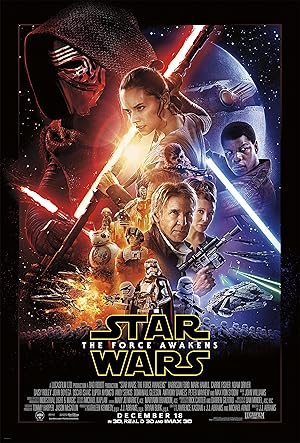
Star Wars: Episode VII - The Force Awakens
2015PG-13dir. J.J. AbramsFamily 58Kids 32Teens 74Adults 76Good71Worldview76The Force Awakens affirms broadly positive values: courage, loyalty, self-sacrifice, and the importance of choosing good over evil. Rey's arc emphasizes resilience and identity — she refuses to define herself by her abandonment and rises to serve others rather than herself. Finn's story is a compelling picture of moral awakening, as he defects from an oppressive regime because he cannot suppress his conscience. Han Solo's estrangement from his son Kylo Ren gives the film genuine emotional weight about the consequences of broken family bonds. The film's worldview is secular but not hostile — good and evil are treated as genuinely real categories, not social constructs, and self-sacrifice is presented as the highest form of courage. The Force as a metaphysical concept is vague and quasi-spiritual, drawing on Eastern rather than Christian ideas, which represents a worldview divergence parents should note.
Content68The film earns its PG-13 rating primarily through sustained action violence — blaster battles, aerial combat, lightsaber duels, and the destruction of entire planets by the Starkiller Base weapon, resulting in the implied deaths of billions. The most emotionally intense moment is the killing of Han Solo by his own son Kylo Ren, which is staged with dramatic weight and may disturb younger or sensitive viewers. There is no sexual content and no nudity; romantic tension between characters is mild and entirely non-physical. Language is restrained — a handful of mild expletives ('damn,' 'hell') with no strong profanity. Alcohol is present in a cantina-like setting but is not glorified or dwelt upon. The overall content is consistent with a soft PG-13 — intense but not graphic.
Moral Framework78The film presents a coherent moral order in which evil is real, destructive, and worth opposing at personal cost. Kylo Ren is not a morally ambiguous antihero — he is portrayed as someone who has chosen darkness and pays a psychological and relational price for it, tormented by the pull toward light he is trying to resist. Finn's defection from the First Order shows that moral choice matters even in systemic evil — individuals are not off the hook because they follow orders. Han Solo's death is a direct consequence of his son's moral failure, reinforcing that evil has devastating relational consequences. Virtue is rewarded narratively: Rey's faithfulness and Finn's courage are what advance the mission. The film's one weakness is that Kylo Ren's arc is left deliberately unresolved, which is narratively appropriate for a trilogy opener but means audiences do not yet see full moral closure.
Theological55Star Wars operates within a self-contained spiritual mythology built around the Force — a quasi-pantheistic energy field that binds the galaxy together and can be accessed by those sensitive to it. This is philosophically closer to Eastern monism or Taoism than to Christian theism, and it presents a dualistic light/dark framework that differs from a biblical understanding of good and evil as moral realities grounded in a personal God. There is no prayer, no reference to the God of Scripture, and no redemptive arc in the Christian sense of grace and atonement — though sacrifice and loyalty function as virtues. The film treats spiritual themes with seriousness rather than mockery, and the concept of characters 'feeling the Force' is presented respectfully if secularly. For Christian families, the Force is best understood as a storytelling device rather than a theological statement, but parents of younger children should be prepared to discuss the differences between the Force and the Holy Spirit.
The Force Awakens is a well-crafted, emotionally grounded blockbuster that revives classic Star Wars themes of good versus evil, courage, and chosen family. Theologically it operates in a secular-spiritual register — the Force is a persistent philosophical alternative to Christian theism that serious families should be prepared to discuss. Its strongest Christian-adjacent themes are found in Finn's conscience-driven defection and the film's insistence that individual moral choices matter.
⚠ Violence⚠ Frightening Scenes⚠ Mature Themes⚠ Drug/Alcohol UseFull review →71/100 - 6

The Lord of the Rings: The Fellowship of the Ring - Special Extended Edition Scenes
2002PG-13Family 62Kids 32Teens 78Adults 88Excellent83Worldview88The extended scenes from Fellowship of the Ring deepen the already robust moral vision of Tolkien's world, where sacrifice, friendship, loyalty, and resistance to corrupting power are constantly affirmed. Frodo's willingness to bear the Ring despite its cost, and Boromir's tragic susceptibility to its temptation, together illustrate the biblical truth that power corrupts and that no one is above the need for grace and humility. The extended material — including additional Shire scenes, Galadriel's prologue, and the deeper fellowship bonding — reinforces the dignity of 'small' and 'ordinary' people being called to extraordinary faithfulness. Evil in this world is not ambiguous: the Shadow is real, ugliness is a mark of moral corruption, and beauty reflects goodness — a deeply Augustinian aesthetic. There is no moral relativism; every character who chooses selfishness (Boromir, Saruman, Gollum in memory) suffers for it, while those who choose sacrifice are ennobled. This is one of the most thoroughly pre-modern and implicitly Christian worldviews in mainstream cinema.
Content72As extended PG-13 scenes, the content largely mirrors the theatrical cut with additional world-building rather than intensified objectionable material. Violence is present — Orc attacks, sword combat, the Mines of Moria sequence — but filmed with a mythic grandeur rather than gratuitous gore; there is blood but no torture or graphic dismemberment. Some extended scenes include the more intense Ringwraith sequences and the Balrog confrontation, which may be frightening to sensitive viewers. There is no sexual content, nudity, or suggestive material of any kind. Language is minimal and period-appropriate, with no profanity. Pipeweed (pipe-smoking) appears among the hobbits, which is a mild depiction of tobacco use in a pastoral, non-glorified context.
Moral Framework90Fellowship of the Ring presents one of the most coherent moral frameworks in modern fantasy cinema, and the extended scenes only reinforce this. The Ring's corruption of Boromir is treated with tragedy and consequence — he falls, recognizes his failure, and dies in an act of redemptive sacrifice that restores his honor. Frodo's decision to bear the Ring alone, accepting suffering for others, is framed explicitly as heroic virtue. Evil characters are never glamorized — Saruman's betrayal is shown as a catastrophic moral failure, not clever pragmatism. The extended material gives more texture to the cost of evil choices and the weight of good ones, making the moral order feel lived-in and serious. Virtue is costly here, not cheap — which reflects a deeply honest and biblical moral vision.
Theological82Tolkien was a devout Catholic, and his subcreative vision imbues the world of Middle-earth with a deeply theological sensibility, even without explicit Christian language or symbols. Providence — the sense that a higher power is guiding events through 'small' agents — is woven throughout, as Gandalf's words about Bilbo being 'meant' to find the Ring echo Romans 8:28 in spirit. Galadriel's character carries almost mediatorial grace, offering gifts and counsel that sustain the fellowship when human strength fails. The extended scenes give additional room to the themes of eucatastrophe (Tolkien's term for sudden grace-filled turns), death and pity, and the burden of mortality — all deeply Christian preoccupations. Faith is not mocked; rather, the film operates in a world where transcendent moral realities are taken with absolute seriousness. This is not an explicitly Christian film, but it is saturated with a Christian imagination.
These extended scenes are supplements to one of the most morally serious and implicitly Christian fantasy films ever made, deepening character relationships and world-building rather than adding objectionable content. The film is demanding — emotionally, thematically, and in terms of frightening imagery — making it best suited for older teens and adults, or mature pre-teens with parental guidance. Theologically, this is Tolkien's Catholic imagination translated faithfully to screen: a world of real evil, costly grace, and the dignity of humble faithfulness.
⚠ Violence⚠ Frightening Scenes⚠ Mature Themes⚠ Drug/Alcohol UseFull review →83/100 - 7

Star Wars: Episode VI - Return of the Jedi
1983PGdir. Richard MarquandFamily 74Kids 62Teens 80Adults 82Excellent78Worldview82Return of the Jedi affirms deeply positive values: self-sacrifice, loyalty, courage, and the belief that even the most fallen person retains the capacity for redemption. Luke's refusal to execute his father and his insistence that 'there is still good in him' is one of the most compelling portrayals of redemptive hope in mainstream cinema. The film celebrates friendship, love, and the willingness to lay down one's life for others — themes that resonate strongly with a biblical worldview. Good and evil are clearly delineated, and evil is not romanticized. The Force as a spiritual framework is syncretistic and New Age in flavor, drawing from Eastern mysticism rather than any Christian understanding of God, which prevents a higher score. Still, the film's moral vision — that love can reclaim the lost — is genuinely consonant with Christian hope.
Content76The film earns its PG rating with fantasy violence that, while plentiful, is largely non-graphic — battles, explosions, and creature combat rather than bloodshed or gore. The Rancor pit and Sarlacc pit sequences involve monster peril and implied deaths but nothing graphic. The most notable content concern for families is Princess Leia's metal bikini costume during the Jabba the Hutt sequence, which is suggestive and lingering in a way that feels out of step with the rest of the film. There is no profanity of note and no drug or alcohol use. A few scenes, particularly the Emperor's lightning attacks on Luke and the death of Darth Vader, carry emotional intensity that may be too much for very young children.
Moral Framework86The film maintains a remarkably coherent moral order for a commercial blockbuster. Vice — represented by the Emperor's lust for power and Vader's servitude to evil — is ultimately punished, while virtue and sacrificial love are rewarded. Luke's choice not to kill his father, refusing to 'give in to hate,' is presented as the morally heroic act, not weakness. Darth Vader's final act of throwing the Emperor down the shaft to save his son carries genuine moral weight — evil is not abandoned cost-free, as Vader dies from his wounds, giving his redemption real consequence. The Emperor's death is depicted as the direct result of his own cruelty turned back on him, reinforcing a moral logic of sowing and reaping. Heroes are genuinely heroic, villains are genuinely villainous, and the line between them is treated seriously.
Theological58The Force represents the film's primary spiritual framework, and it is explicitly non-Christian — a pantheistic, impersonal energy field drawing heavily from Eastern philosophy and Taoism rather than a personal God. The appearance of Obi-Wan and Yoda as 'Force ghosts' suggests a form of spiritual continuity after death that is more reminiscent of ancestor veneration or spiritualism than Christian resurrection. That said, the film's central spiritual arc — a son's belief that his father can be saved, and a father who chooses love over allegiance to darkness at the cost of his own life — carries unmistakable echoes of Christian redemption theology, even if unintentional. There is no hostility toward Christianity, no demonic glorification, and no mockery of faith. Parents should be aware that children may absorb a syncretistic spirituality from the Force concept and use it as a natural opportunity to discuss the difference between the Force and the personal God of Scripture.
Return of the Jedi is the most emotionally and morally rich entry in the original Star Wars trilogy, culminating in a story about a son's sacrificial love redeeming a fallen father. Its worldview is optimistic, its moral framework coherent, and its redemptive arc genuinely moving, though its spiritual framework is syncretic and its brief sexualization of Princess Leia is a real concern for families with young children.
⚠ Violence⚠ Frightening Scenes⚠ Sexual Content⚠ Mature ThemesFull review →78/100 - Worldview78
The film affirms love, family, and the sanctity of innocent life — the entire plot turns on rescuing helpless puppies from a villain who sees them only as luxury goods, which carries a subtle but real message about the value of creatures and the evil of treating the vulnerable as mere commodities. Roger and Anita model a healthy, loving marriage built on shared affection and mutual respect, and their home is depicted as a place of warmth and belonging. Cruella DeVil is unambiguously coded as a villain whose materialism and vanity are presented as morally bankrupt — the film does not flirt with making her sympathetic or misunderstood. The resolution rewards self-sacrifice, resourcefulness, and community cooperation among the animals and their human allies. There are no significant secular-humanist messages that undermine the family or redefine moral categories. The film's values are broadly wholesome and align well with a Christian understanding of love, justice, and the wrongness of cruelty.
Content82As a G-rated family comedy, the film contains very little objectionable content. The primary conflict involves dognapping and cartoon-style slapstick danger, including chase sequences and physical comedy that are clearly played for laughs rather than genuine menace. There is no sexual content or nudity whatsoever. Language is clean throughout, appropriate for all ages. Cruella's cigarette smoking is visible and somewhat prominent — she is rarely without a cigarette holder — which is a notable if minor concern for parents of young children, though it functions partly as a visual character-villain shorthand. Some mild peril during the climactic chase may momentarily startle very young viewers but is not frightening in a lasting way.
Moral Framework84The film maintains a clear and confident moral order from beginning to end. Cruella's cruelty is never excused or contextualized away — she is villainous because she is selfish, vain, and willing to harm innocents for fashion, and she suffers a humiliating defeat for it. The heroes — human and animal alike — succeed through loyalty, creativity, and perseverance rather than luck or moral compromise. Virtue is genuinely rewarded: Roger and Anita's decency and love for their dogs is what ultimately saves the day, and they are left materially blessed at the film's conclusion. The puppies' rescue is a satisfying act of justice, and no ambiguity is introduced about whether Cruella's plan was ever remotely acceptable. This is an unusually clean moral framework for a live-action family film.
Theological55Like most mainstream Hollywood family films of its era, 101 Dalmatians is essentially silent on explicitly theological or spiritual themes — there is no prayer, no church, no direct reference to God or faith. The film is not hostile to Christianity in any way; it simply does not engage the transcendent. That said, the film's moral architecture — the conviction that innocent life has inherent worth, that evil is real and deserves defeat, that love and sacrifice are genuinely good — reflects a broadly Judeo-Christian moral imagination even if unacknowledged. Cruella's name itself is a kind of moral allegory, and the film's confident distinction between good and evil is itself a theologically resonant posture in a secular entertainment landscape. Parents should not expect any faith content but also need not worry about anti-Christian messaging.
The 1996 live-action remake of 101 Dalmatians is an entertaining, morally straightforward family comedy built around Glenn Close's deliciously over-the-top villainy and a charming ensemble of canine performers. It affirms family, justice, and the wrongness of cruelty without pretension or mixed messaging. Theologically thin but not spiritually hostile, it is one of the safer mainstream family films of its decade.
⚠ Frightening Scenes⚠ Mild ThemesFull review →77/100


Frequently asked questions
What action movies are appropriate for Christians?
TheoScope rates How to Train Your Dragon (2025) as the top action film for Christian viewers with a score of 78/100, evaluated for worldview, content safety, and moral framework.
Which action movies have the best moral framework?
How to Train Your Dragon scored highest for moral framework among action and adventure films reviewed by TheoScope. See full profiles for detailed scores on content and worldview.
What adventure films are safe for Christian families?
How to Train Your Dragon (2025) scores 78/100 on TheoScope and is among the highest-rated action and adventure films for Christian family viewing.
Browse other categories
See full scores, content flags & more
Free to browse. Sign up to unlock complete score breakdowns and the full TheoScope library.