Best Faith-Based Movies for Christians
Faith-based films vary enormously in theological depth — from genuinely gospel-centered stories to inspirational movies that borrow Christian aesthetics without Christian substance. TheoScope scores each on worldview, moral framework, content, and theological faithfulness.
- Worldview92
Chariots of Fire is one of the most overtly Christian mainstream films ever made, affirming that human gifts come from God and are best used to honor Him. Eric Liddell's refusal to run on the Sabbath — at great personal cost, including pressure from the British Olympic Committee and even the Prince of Wales — is portrayed as noble, principled, and ultimately vindicated. The film treats Jewish identity and the experience of antisemitism with dignity through Harold Abrahams, presenting his drive to overcome prejudice as sympathetic and understandable without excusing the casual bigotry he faces. Human dignity, integrity, and the courage of conscience are consistently upheld as the highest values. The film does not shy away from showing that worldly ambition and pride carry spiritual costs, giving Harold's story a subtle but real moral weight alongside Eric's explicitly faith-driven narrative. Both men are shown as pursuing excellence in ways that reflect genuine virtue, even if through different motivations.
Content88Chariots of Fire is exceptionally clean for a drama of its weight and era. There is no sexual content, no nudity, and no graphic violence of any kind. Language is restrained and period-appropriate, with no notable profanity. There are scenes of social drinking in the Cambridge college setting, but alcohol is not glamorized or central to any storyline. The film's most intense moments are the competitive races themselves, which are dramatically tense but entirely appropriate. This is genuinely family-appropriate content with virtually nothing that would concern a discerning parent.
Moral Framework91The film presents a remarkably coherent moral framework in which integrity and conviction are rewarded, and compromise under social or political pressure is shown as the lesser path. Eric Liddell's decision to forgo the 100 meters rather than violate his Sabbath convictions is framed unambiguously as the right choice, and he is vindicated when he wins gold in the 400 meters instead. Harold Abrahams' ambition is handled more ambiguously — his drive is understandable and sympathetic, but the film subtly implies that running purely to prove something to others is a less settled foundation than running for God's glory. The arrogance of the British establishment figures who condescend to both men is portrayed critically without becoming a polemic. Virtue is genuinely rewarded and moral cowardice is shown to be exactly that. The film leaves viewers with a strong sense that how and why we pursue excellence matters as much as whether we achieve it.
Theological96This is one of the most theologically rich films in the mainstream canon. Eric Liddell's faith is portrayed as authentic, joyful, and costly — not as a quirk or a cultural artifact, but as the actual center of his life and identity. His famous line, 'When I run, I feel His pleasure,' is one of the most memorable articulations of vocation and divine delight in all of cinema, and the film treats it with complete sincerity. The Sabbath subplot is handled with theological seriousness: the film does not mock Liddell's conviction or suggest he is being rigid; it portrays his stand as a form of genuine worship. His preaching scenes in Scotland are shown warmly, with congregational response that feels real. The film also treats Harold Abrahams' Jewish faith with respect, presenting antisemitism as a genuine injustice without diminishing either man's spiritual identity. There is nothing anti-Christian here — quite the opposite; this may be the most favorable mainstream depiction of sincere Christian conviction in modern film history.
Chariots of Fire is a rare mainstream film that treats Christian faith as intellectually serious, spiritually genuine, and personally costly — and presents that faith as admirable and vindicated. It is one of the finest examples of cinema exploring vocation, integrity under pressure, and the theology of work and play. For families with older children and teenagers, it is close to essential viewing.
⚠ Mature Themes⚠ Positive Faith Themes⚠ Drug/Alcohol UseFull review →91/100 - Worldview92
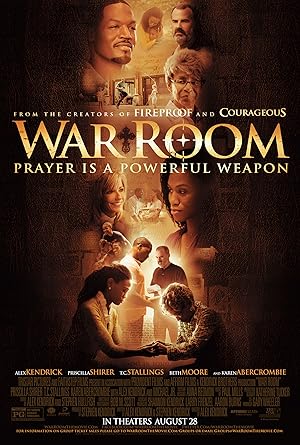
War Room is one of the most explicitly pro-Christian worldview films produced in mainstream evangelical cinema, affirming marriage, family, prayer, faith, repentance, and the reality of spiritual warfare as genuine goods. The film treats human dignity seriously — Elizabeth is not a passive victim but an active agent who chooses to fight for her marriage through prayer rather than against her husband through bitterness. Tony's arc involves genuine moral failure (professional dishonesty, emotional neglect, flirtation with adultery) followed by authentic conviction and repentance, which the film presents as both necessary and possible. Virtue is clearly rewarded and vice clearly judged, and the film communicates an explicitly biblical framework: the real enemy is not flesh and blood but the spiritual forces working to destroy the family. There are no morally relativistic messages, no secular humanist alternatives presented sympathetically, and no confusion about what the film believes to be true. This is a rare example of a film whose entire worldview architecture is constructed from a biblical foundation without apology.
Content88War Room is rated PG and earns it comfortably — it is among the cleanest films a family could choose to watch together. There is no sexual content or nudity of any kind. Violence is entirely absent; even the tension in the Jordan marriage is conveyed through arguments and emotional distance rather than physical conflict. Language is mild at most — no profanity, no crude humor. There is one scene involving Tony's dishonest business practices (skimming pharmaceutical samples) that touches on theft and moral compromise, but it is handled as a teaching moment rather than glorified. The only mild concern for very young children might be the intensity of some of Miss Clara's dramatic prayer scenes, which some sensitive children could find emotionally overwhelming, but these are not frightening in any conventional sense.
Moral Framework90The moral framework of War Room is unusually coherent and consistent for a modern film. Tony's sins — neglect of his family, dishonesty at work, his wandering attention toward another woman — are treated as real sins with real consequences, including professional exposure and near-destruction of his marriage. The film does not excuse or minimize his failures or portray Elizabeth's passive endurance as the solution; rather, her spiritual transformation actively changes the dynamic. Miss Clara functions as a wise moral guide whose authority is grounded in lived faith rather than institutional credentials. Justice arrives in ways that feel earned: Tony's workplace dishonesty is exposed and he must make it right at personal cost, which the film presents not as punishment but as the fruit of genuine repentance. The film rewards prayer, humility, and faithfulness, and leaves the audience with a clear and confident sense of moral order rooted in biblical ethics.
Theological97War Room may be the most theologically intentional wide-release Christian film of the past decade. Prayer is not treated as a feel-good ritual or a psychological coping mechanism but as genuine warfare — a real engagement with spiritual forces in the name of Jesus Christ. Miss Clara's 'war room' (a literal closet turned prayer space) is drawn directly from Matthew 6:6 and is presented with both humor and sobriety. The film explicitly names Jesus, quotes Scripture, and frames the Christian life in terms of spiritual battle drawn from Ephesians 6. Elizabeth's transformation is clearly attributed to the Holy Spirit, not personal willpower or self-help thinking. Repentance, forgiveness, and grace are not merely alluded to but dramatized with theological care — Tony's confession to his employer is a textbook illustration of what genuine repentance looks like in practice. This film will resonate deeply with theologically informed viewers and also serves as an accessible introduction to biblical prayer for those newer to faith.
War Room is an unapologetically Christian drama centered on the transformative power of prayer in a struggling marriage. It is theologically robust, morally clear, and content-appropriate for nearly all ages, though younger children may not engage with the marital drama at the center of the story. It sits near the top of the evangelical film genre for both production quality and doctrinal faithfulness.
⚠ Mature Themes⚠ Positive Faith ThemesFull review →91/100 - Worldview92
The film powerfully affirms the value of intellectual honesty, marital commitment, and the transformative power of truth. Lee Strobel's journey models that genuine inquiry — even hostile inquiry — can lead to faith when evidence is followed honestly. The film presents Christianity not as blind superstition but as a reasonable, historically grounded conviction, directly countering the secular caricature of faith. Leslie's quiet, gracious witness in the face of her husband's hostility affirms the virtue of patient love and prayer. Ultimately the film celebrates conversion not as emotional capitulation but as intellectual and moral surrender to truth, which is a robustly biblical vision. Human dignity, the sanctity of marriage, and the reality of grace are all honored.
Content88The film is rated PG and earns it comfortably. There is a subplot involving a police shooting case that includes mild tension and brief courtroom drama but no graphic violence. A secondary character struggles with alcoholism, which is depicted honestly but not gloriously — it functions as part of his character arc rather than as glamorization. There is no sexual content, no nudity, and no strong language. The marital tension between Lee and Leslie is emotionally realistic but handled with appropriate restraint. This is one of the cleanest faith-based films in terms of raw content concerns.
Moral Framework88The film presents a clear moral order in which intellectual pride, atheism, and emotional avoidance have real consequences — Lee's marriage frays, his professional relationships are strained, and his inner life is shown to be genuinely hollow beneath the bravado. Virtue in the form of Leslie's perseverance and grace is rewarded, and Lee's eventual repentance and faith result in genuine restoration of his marriage and character. The secondary storyline involving a wrongfully accused police officer reinforces the film's commitment to justice and truth-telling. There is no moral relativism — the film takes seriously the idea that there are right and wrong answers, and that finding the truth matters eternally. Characters are judged, not simply excused, and the arc of the story affirms that transformation is possible and meaningful.
Theological96This is among the most theologically substantive faith-based films produced in recent years. The film engages directly with the historical case for the Resurrection, interviewing real scholars and presenting their arguments accessibly without dumbing them down. Christian faith is portrayed as intellectually credible, personally costly, and ultimately life-giving — a rare trifecta in Hollywood productions. Prayer is shown as genuine and consequential, and the Church is portrayed as a community of grace rather than hypocrisy. The conversion scene is emotionally honest and theologically grounded — Lee does not simply 'feel' his way to faith but reasons and then surrenders. Grace, repentance, and the Lordship of Christ are all treated with seriousness.
The Case for Christ is a biographical drama based on Lee Strobel's memoir of the same name, chronicling his investigation into the historical evidence for the Resurrection of Jesus. It is one of the most intellectually serious Christian films in the faith-based genre, engaging apologetics honestly rather than relying purely on emotional appeal. It lands as a strongly recommended film for teenagers and adults, with genuine evangelistic and discipleship value for families willing to engage its arguments together.
⚠ Mature Themes⚠ Drug/Alcohol Use⚠ Positive Faith ThemesFull review →90/100 - Worldview92
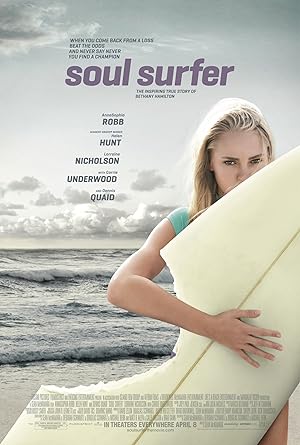
Soul Surfer is one of the most explicitly Christian mainstream films of the past two decades, presenting a worldview thoroughly grounded in biblical values of faith, perseverance, family, and sacrificial love. Bethany's response to catastrophic loss is not bitterness or despair but a deepening trust in God's sovereignty, modeled with sincerity and without sentimentality. The film affirms that human dignity is not contingent on physical wholeness or competitive achievement, countering a culture that defines worth by performance. Her eventual decision to use her platform to serve tsunami victims in Thailand illustrates that purpose transcends personal ambition — a genuinely redemptive vision of vocation. The Hamilton family is portrayed as authentically Christian in a way that is warm and appealing rather than preachy or caricatured. Truth, beauty, courage, and selfless love are all clearly upheld as the film's animating values.
Content80The shark attack is depicted with enough realism to be genuinely startling — there is blood in the water and the aftermath of a severed limb is shown, though not gratuitously or with lingering gore. The scene is intense and may be frightening for younger or sensitive viewers, which is the primary content concern in an otherwise clean film. There is no sexual content, no nudity, and no profanity worth noting. Mild competitive rivalry and brief interpersonal tension add natural dramatic weight but nothing objectionable. Alcohol and drug use are entirely absent. The content is broadly family-friendly with the single caveat being the shark attack sequence.
Moral Framework90The film presents a clear and coherent moral framework in which faith and virtue are tested, not abandoned, in the face of suffering. Bethany's struggle is not resolved through a triumphalist 'everything worked out perfectly' arc — she loses competitions and faces real setbacks — which gives the moral framework integrity rather than naivety. Her eventual return to competitive surfing is meaningful precisely because it is earned through perseverance and surrender to God's will rather than sheer willpower alone. The people around her — her family, her youth group leader Sarah, her friends — consistently model encouragement, sacrifice, and honest compassion. There are no true villains, which keeps the film from easy moral contrast, but the internal conflict between ambition and calling is handled thoughtfully. Virtue is genuinely rewarded and the audience leaves with a clear sense that faith and character matter.
Theological95Theological content in Soul Surfer is unusually substantive for a mainstream theatrical release. Scripture is quoted directly and meaningfully — Philippians 4:13 is central to the story's arc — and prayer is depicted as genuine, intimate, and integral to the characters' lives rather than a decorative backdrop. Bethany's faith crisis after the attack is honest and not glossed over; she wrestles with why God allowed this, and the film does not offer a cheap answer. Her youth leader Sarah, played by Carrie Underwood, guides her toward a biblical understanding of suffering and purpose without being preachy or condescending. The theological conclusion — that God's purposes are larger than our plans and that brokenness can become a platform for ministry — is explicitly articulated and thematically earned. This is among the most theologically serious family films in its genre.
Soul Surfer is a rare mainstream film that takes Christian faith seriously as a lived reality rather than a cultural accessory. Based on the true story of Bethany Hamilton, it is both an inspiring biography and a theologically rich meditation on suffering, purpose, and trust in God. It lands as one of the strongest faith-affirming family films of its era.
⚠ Violence⚠ Frightening Scenes⚠ Mature Themes⚠ Positive Faith ThemesFull review →88/100 - Worldview91
I Can Only Imagine is one of the most overtly redemptive films in recent mainstream Christian cinema, built on the twin pillars of grace and transformation. The film affirms that no person is beyond God's reach — Arthur Millard's violent, broken life is turned inside out by a genuine conversion, which the film treats not as a cheap plot device but as a costly, visible change. Human dignity is consistently upheld: Bart's pain is taken seriously, Shannon's faith is portrayed as genuine and grounding, and the film never romanticizes abuse or excuses it. The value of forgiveness — not as emotional convenience but as a hard-won spiritual act — is the central moral statement of the story. Truth is handled honestly: the film does not pretend Bart's childhood was fine or that forgiving his father erased the wounds. The overall moral vision is explicitly biblical, centering on redemption through Christ as the only adequate explanation for the transformation the story depicts.
Content78The film carries a PG rating and is appropriate for most family viewing, though it deals honestly and at times intensely with domestic violence. Bart's father is shown striking him and behaving with rage in several scenes — nothing is depicted graphically, but the emotional weight is real and could be distressing for younger children. There is no sexual content, no nudity, and no meaningful profanity. Alcohol is shown in connection with Arthur's abusive period, used contextually rather than approvingly. The violence is emotional and domestic rather than action-oriented, which means it may actually land harder with sensitive viewers than conventional screen violence. Overall the content is restrained and purposeful throughout.
Moral Framework90The film presents an exceptionally coherent moral order in which sin is shown to have devastating, generational consequences — Arthur's abuse damages Bart's childhood, his relationships, and his sense of self-worth in ways the film tracks carefully across time. Crucially, the film does not allow Arthur's conversion to erase accountability; Bart must still choose forgiveness as an act of will, not because his father deserves it, but because grace operates beyond desert. Virtue is rewarded — not immediately or cheaply, but through perseverance and surrender to God. The antihero arc of Arthur is handled with unusual care: he is not excused or vilified but shown as a man genuinely broken and genuinely restored. The film's moral framework is explicitly Christian in that it locates the power to change in God rather than in human self-improvement. There is no moral ambiguity left unresolved, and the audience leaves with a clear sense that truth, repentance, and forgiveness are worth pursuing.
Theological95This is one of the most theologically substantive films to emerge from Christian popular culture in the past decade. Faith is not ornamental here — it is the hinge on which the entire story turns, and the film treats it with specificity and honesty rather than vague inspirational language. Arthur's conversion is depicted as a work of God mediated through a local church and ongoing discipleship, not a momentary emotional experience. Bart's songwriting process is framed as a theological struggle — grappling with the nature of heaven and what it means to be in the presence of Christ — which gives the famous song its genuine weight. Prayer, Scripture, and Christian community all appear as living realities rather than props. The film does not shy away from the difficulty of reconciling a good God with a painful childhood, and it handles that tension honestly without cheap resolution.
I Can Only Imagine is a biography of MercyMe frontman Bart Millard, tracing the painful childhood and family brokenness behind the best-selling Christian song of all time. It is an unusually honest and theologically grounded film by the standards of Christian cinema, with genuine redemptive power and strong performances from Finley and Quaid. The domestic violence content makes it unsuitable for young children but highly valuable for older teens and adults willing to engage with the full weight of what grace and forgiveness actually cost.
⚠ Violence⚠ Mature Themes⚠ Drug/Alcohol Use⚠ Positive Faith Themes⚠ Frightening ScenesFull review →87/100 - Worldview92
Courageous is built entirely around a biblical vision of fatherhood, family, and personal responsibility before God. The film explicitly affirms that men are called to lead their families with courage, integrity, and faith — not as a cultural suggestion but as a divine mandate. Virtue is consistently rewarded across all four character arcs, and failure — including absentee fathering and moral compromise — is treated as genuinely costly rather than excusable. The subplot involving a father's temptation to falsify work records presents honesty and integrity as non-negotiable, even at personal cost, and the film rewards that faithfulness. Human dignity, the sanctity of family, and the fatherhood of God are central and unambiguous themes. There is no moral relativism here; the film has a clear, confident, and coherent biblical worldview from start to finish.
Content72As a PG-13 film, Courageous contains moderate action violence typical of a police drama — including a shootout, a foot chase, gang-related threats, and a devastating early scene involving the death of a child in a car accident that is emotionally intense and may be distressing for younger viewers. There is no sexual content, nudity, or romantic material beyond appropriate married-couple affection. Language is very mild, with no profanity of note. Drug and alcohol use appear peripherally in the context of gang criminal activity, not as lifestyle glorification. The most difficult content element is the child's death, which is handled with emotional weight but not graphic imagery, and the film's gang subplot includes some tense confrontational scenes with firearms.
Moral Framework91The film's moral framework is among the clearest and most deliberate of any mainstream Christian drama. Sin — including absenteeism, dishonesty, and abandonment — carries real and visible consequences in the lives of the characters' families. The men who choose integrity and covenant faithfulness see their relationships restored and strengthened, while unrepentant characters bear the weight of their choices. Criminality is plainly condemned and law enforcement is portrayed as genuinely honorable work. One character's backstory involves drug addiction and past crime, and his redemption arc is earned rather than cheap, requiring genuine accountability. The film's Resolution ceremony — where the fathers publicly commit to biblical fatherhood — functions as a moral capstone, calling the audience not merely to observe virtue but to practice it.
Theological96Theology is not incidental to Courageous — it is the engine of the entire film. Scripture is quoted directly and meaningfully, prayer is shown as genuine and personal rather than performative, and the characters' transformations are explicitly rooted in their relationship with God. The film draws directly from Malachi 4:6 ('turn the hearts of fathers to their children') and presents the local church and biblical community as legitimate sources of accountability and growth. The grief storyline becomes a crucible through which one character's faith is tested and deepened rather than abandoned — a theologically honest portrayal of lament and trust. Christianity is not caricatured, mocked, or reduced to sentiment; it is presented as true, demanding, and life-changing. This is one of the most overtly and authentically Christian mainstream films produced in the 2010s.
Courageous is a faith-driven police drama from Sherwood Pictures that functions simultaneously as an action film and a biblical call to fatherhood. It is one of the most theologically substantive films to emerge from the Christian film movement, with strong performances and genuine emotional depth despite its limited production budget. The film's central child-death storyline and gang-violence sequences make it inappropriate for young children but powerfully meaningful for teenagers and adults.
⚠ Violence⚠ Frightening Scenes⚠ Mature Themes⚠ Positive Faith ThemesFull review →86/100




Frequently asked questions
What is the best faith-based movie for Christians?
Based on TheoScope's analysis, Chariots of Fire (1981) is the top-rated faith-based film with a Discern Score of 91/100 — evaluated for theological soundness, worldview, and content appropriateness.
Are faith-based movies theologically sound?
Chariots of Fire scores highest for theological soundness among faith-based films reviewed by TheoScope. Scores vary significantly — always check a film's full profile before watching or recommending.
What faith-based films are safe for family viewing?
Chariots of Fire (1981) scores 91/100 overall and is among the highest-rated faith-based films for family viewing on TheoScope. Check the full profile for audience suitability scores.
Browse other categories
See full scores, content flags & more
Free to browse. Sign up to unlock complete score breakdowns and the full TheoScope library.