Best Kids & Animated Movies for Christian Families
Children's and animated films shape early beliefs about identity, morality, and the world. TheoScope reviews the most popular kids films for theological faithfulness and content safety — because what children watch forms them.
- Worldview91
David (2025) is rooted in a thoroughly biblical worldview, drawing directly from one of Scripture's most beloved narratives about faith, courage, and divine calling. The film affirms that true strength comes not from human might but from trust in God, as embodied in David's willingness to face Goliath armed with faith rather than armor. Loyalty, humility, and obedience to God are presented as the highest virtues, while pride, fear, and compromise are shown as moral failures. Human dignity is honored throughout, and the story's arc consistently rewards faithfulness while portraying the corruption of power as a spiritual danger. The film's framing of David as a shepherd-king mirrors the messianic typology of Scripture, giving the story theological depth beyond mere adventure. Truth is treated as objective and God-given, and the narrative leaves audiences with a clear sense that purpose and identity flow from relationship with a faithful God.
Content82As a PG-animated film aimed at families, David keeps its content largely appropriate, though the subject matter — warfare, political intrigue, and the killing of Goliath — introduces some stylized animated violence that may be intense for very young children. The famous David-and-Goliath battle is depicted with dramatic tension and likely includes the giant's death, rendered in animation that stops short of graphic realism but does not sanitize the stakes. There is no sexual content, no profanity, and no drug or alcohol use of note. Some scenes involving Saul's erratic and threatening behavior, and the broader themes of betrayal and political persecution, may produce emotional intensity or frightening moments for sensitive younger viewers. The animated format naturally softens the material, making this broadly comparable to a strong PG adventure film.
Moral Framework88The film presents a coherent and consistent moral order in which faithfulness to God leads to blessing, and pride and disobedience lead to downfall — Saul's trajectory serving as a cautionary counterpoint to David's. David is portrayed as genuinely virtuous without being sanitized; his courage and humility are tested and earned, not merely assumed. The story's conflict is clearly framed: arrogance and fear oppose trust and obedience, and the narrative rewards the latter. Jonathan's loyalty and friendship illustrate self-giving love as a moral ideal, standing in contrast to Saul's self-serving jealousy. Consequences for sin and faithlessness are present in the broader arc, giving the film moral weight. Viewers are left with a clear sense that character — especially integrity before God — matters more than status or power.
Theological94This film is among the most theologically intentional animated features available to families, treating the God of Israel not as a background deity but as an active, personal, and faithful presence throughout David's life. Prayer, devotion, and prophetic calling are central narrative elements, and the film frames David's journey as one of spiritual formation, not merely heroic achievement. The whisper of God referenced in the plot description signals that the film takes seriously the intimacy of the divine-human relationship, echoing themes of calling, identity, and covenant. Faith is not caricatured or treated as naïve — it is presented as the animating force behind David's courage and the source of his identity as a shepherd, warrior, and future king. The story naturally points toward messianic themes, as David is a type of Christ in the biblical tradition — the humble shepherd who becomes king and delivers his people — giving theologically aware parents rich material to explore. There is no occult, no competing spirituality, and no distortion of the biblical narrative evident from the available information.
David (2025) is a faith-forward animated retelling of one of Scripture's most enduring stories, made with evident theological seriousness and a clear reverence for its biblical source material. It lands as one of the stronger family-faith animated films in recent memory, offering genuine spiritual depth alongside adventure and drama. The mild violence and emotional intensity make it best suited for children roughly seven and older, but the film's values and faith content make it genuinely worthwhile for the whole family.
⚠ Violence⚠ Frightening Scenes⚠ Mature Themes⚠ Positive Faith ThemesFull review →88/100 - Worldview82
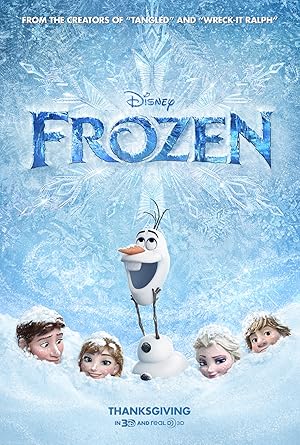
Frozen affirms several genuinely positive values: selfless love, courage, loyalty, and the importance of honesty in relationships. The film's central twist — that an act of true love is sacrificial sisterly devotion rather than a romantic kiss — subverts a tired trope in a way that actually reinforces a biblical understanding of agape love over sentimentality. Anna's persistent, hopeful pursuit of her sister despite repeated rejection reflects something close to unconditional love. The film also gently critiques impulsive romantic decisions, with Anna's engagement to Hans after one day played for eventual discomfort and consequence. However, the film's treatment of Elsa's powers carries a mild undercurrent of 'be who you are' individualism that edges toward self-expression as the highest virtue, though this is somewhat tempered by the film's conclusion that Elsa's freedom is found in love rather than pure self-liberation. Overall the worldview is warm, pro-family, and constructive, with no materialism, cynicism, or moral darkness.
Content88Frozen is a thoroughly family-appropriate animated film with minimal objectionable content. Violence is limited to cartoon-style action sequences — characters falling into snow, a snowman being sliced apart harmlessly, and a climactic moment involving Hans's treachery that is intense but not graphic. There is no sexual content whatsoever; the romance between Anna and Kristoff is sweet and modest. Language is entirely clean throughout the film's runtime. There is a brief comedic scene involving a sauna with trolls that features Kristoff in a towel, but it is entirely non-suggestive. The only content worth noting for very young children is the emotional intensity of parental death early in the film and some genuinely frightening icy sequences that may unsettle the very youngest viewers.
Moral Framework80The film maintains a clear and coherent moral order: deception is punished, self-sacrifice is rewarded, and genuine love is distinguished from manipulation. Hans is revealed as a calculating villain whose selfishness results in his public disgrace and removal, delivering a satisfying moral consequence. Elsa's arc resolves not through unchecked freedom but through reconciliation and love, which gives the film moral grounding beyond simple individualism. Anna's willingness to sacrifice herself for her sister is the moral apex of the film and is presented with unmistakable weight and beauty. Some mild ambiguity exists in how Elsa's early 'Let It Go' sequence frames self-isolation as liberation, but the film ultimately corrects this reading. The trolls' comedic interference in Anna and Kristoff's relationship is a minor moral muddiness but hardly damaging.
Theological58Frozen operates in a secular fairy-tale framework with no explicit Christian content, prayer, or reference to God. The trolls function as a kind of folk spiritual authority — healers and seers — which introduces a mild pagan-adjacent element, though they are played entirely for comedy and warmth rather than occult seriousness. Olaf's musings about summer carry a whimsical innocence that touches on self-giving love without connecting it to any transcendent source. The film's climactic act of sacrificial love has genuine theological resonance — laying down one's life for another echoes John 15:13 — but this is thematic rather than intentional Christian content. Faith is neither honored nor mocked; it is simply absent. A discerning parent can draw rich theological connections from the film's themes, but they must supply the framework themselves.
Frozen is a beautifully animated, musically accomplished Disney film that affirms sacrificial love, family loyalty, and the danger of deception. It operates entirely within a secular fairy-tale world but offers parents rich material for conversations about love, identity, and what it truly means to be free. It lands solidly as wholesome family entertainment with some genuine emotional depth.
⚠ Frightening Scenes⚠ Mature Themes⚠ ViolenceFull review →80/100 - Worldview78
The Wild Robot affirms deeply positive values including self-sacrifice, perseverance, unconditional love, and the worth of every life — themes that resonate naturally with a biblical understanding of human dignity and care for creation. Roz's journey from a purely functional machine to a devoted mother-figure powerfully illustrates that love is not merely programmed behavior but a chosen commitment with real cost. The film celebrates community, interdependence, and the idea that we are shaped by those we love and serve. There is a gentle environmental stewardship message that honors the natural world without tipping into nature-worship or anti-human ideology. The sacrifice Roz ultimately makes for Brightbill echoes genuinely redemptive themes. Minor secular elements include a worldview in which meaning is self-constructed rather than God-given, but this is handled with enough narrative warmth that it does not undermine the overall moral vision.
Content82The Wild Robot is a PG-animated film with content appropriate for most children, though it carries some emotional weight and mild intensity. There is animated animal-on-animal predation — hunting sequences, animals being chased and killed in a nature-of-the-wild sense — that is not gratuitous but is more frank than typical children's fare. The climactic battle sequence involving robots attacking the island is tense and involves destruction and implied loss. There is no sexual content, no profanity, and no drug or alcohol use of any kind. Some scenes involving the death or abandonment of animals (particularly the deaths of Brightbill's biological mother and siblings early in the film) may be emotionally distressing for very young viewers. Overall the content is well within PG boundaries and handled responsibly.
Moral Framework84The film maintains a clear and coherent moral order throughout: love, sacrifice, and perseverance are consistently rewarded, while selfishness and cruelty — even when framed as survival instinct — are shown to leave characters isolated and diminished. Roz's transformation is earned through genuine virtue and cost, not simply positive thinking. Brightbill's arc from resentment to reconciliation to gratitude models a meaningful moral journey that children can follow and feel. The antagonist robots are framed as blind instruments of a dehumanizing system rather than evil individuals, which is a thoughtful moral nuance — the film critiques systems that reduce persons to utility without becoming preachy. Justice and loyalty are upheld, and the film does not shy away from the reality that love sometimes demands loss. There is no moral relativism here; good and evil are distinguishable, and goodness is worth the price.
Theological62The film contains no explicit Christian or religious content — there is no prayer, no reference to God or faith, and no church or spiritual community depicted. However, it is rich in what might be called common-grace theological themes: self-giving love that costs the giver dearly, the dignity of the outcast, sacrificial parenting, and the idea that we are made for more than mere function or survival. These themes are not framed in explicitly biblical terms, but they harmonize readily with a Christian understanding of love as agape — love that chooses the other regardless of return. The film's spirituality is entirely immanent rather than transcendent, rooted in the natural world and emotional bonds rather than anything beyond them. Parents with theological intentionality will find ample material to draw out, even though the film does not do that work itself. This is a neutral-to-positive spiritual landscape — not hostile to faith, but not pointing toward it either.
The Wild Robot is a beautifully crafted animated film with genuine emotional depth and strong moral instincts that align comfortably with Christian family values in practice, even if not in explicit framework. It is one of the more theologically fertile mainstream animated films in recent years, offering rich material for conversations about love, sacrifice, belonging, and purpose. It lands in a warmly humanistic rather than explicitly Christian worldview, but the distance between the two is small enough that thoughtful families can bridge it naturally.
⚠ Violence⚠ Frightening Scenes⚠ Mature ThemesFull review →78/100 - Worldview78
Kung Fu Panda affirms several broadly positive values: hard work, perseverance, humility, and the discovery of one's true identity and worth. The film's central message — that there is no 'secret ingredient' to greatness, and that what makes something special is believing in it — carries both inspirational and mildly concerning dimensions. On the positive side, Po's journey affirms that dignity and purpose are not earned by status or appearance but are inherent, which resonates with a biblical understanding of human worth. However, the film also leans on a self-actualization framework: the lesson that you become great by believing in yourself edges toward secular humanism rather than pointing toward a source of worth outside the self. The villain, Tai Lung, serves as a cautionary tale about pride and the hunger for validation, and his defeat reinforces that selfishness and vengeance lead to destruction. Overall the worldview is positive and family-affirming, though rooted in Eastern philosophical tradition rather than any Christian framework.
Content82The film is a PG-animated action feature with stylized kung fu combat throughout, but violence is almost entirely bloodless and consequence-free in the cartoon tradition. Tai Lung is a menacing villain — he escapes prison violently and battles the Furious Five in a scene that may feel intense for very young children — but no deaths are shown explicitly and there is no gore. There is no sexual content, nudity, or romantic suggestion of any kind. Language is clean throughout, with no profanity and only mild comedic insults. There are a few jokes about Po's weight and appetite that are gentle and not mean-spirited. Mild slapstick violence and comedic falls are pervasive but age-appropriate.
Moral Framework80The film presents a reasonably coherent moral order: pride and entitlement are condemned through Tai Lung's arc, while humility, perseverance, and inner growth are rewarded through Po's. Master Shifu's journey — learning to let go of his own failures in raising Tai Lung — adds a thoughtful layer about guilt, mentorship, and the consequences of withholding affirmation. Tai Lung faces real defeat, and his downfall is directly tied to his refusal to accept what he could not control or earn legitimately. The moral of the Dragon Scroll — that the source of power is belief in one's own inherent worth — is affirming but lacks grounding in anything outside the self, which is a philosophical limitation rather than a moral failure. Justice prevails, the villain is defeated, and the hero's growth is earned through genuine effort and character development, leaving audiences with a satisfying and generally healthy moral sense.
Theological52The film is set in a world steeped in Chinese cultural and philosophical tradition, drawing heavily from Taoist and Buddhist aesthetics — concepts like chi, inner peace, destiny, and spiritual mastery are central to the story. There is no Christian content, no prayer in any recognizable sense, and no reference to God or Scripture. The idea of an 'ancient prophecy' being fulfilled by an unlikely chosen one carries faint echoes of messianic narrative structure, but this is more mythological storytelling than theological substance. Faith in the film is essentially faith in oneself, which is a significant departure from a biblical understanding of faith directed toward God. The spiritual elements are not hostile to Christianity, but they reflect a pantheistic or humanistic framework that parents should be prepared to discuss. The film treats the transcendent as real in a generic, Eastern sense — which is neither affirming of Christian faith nor actively antagonistic toward it.
Kung Fu Panda is a well-crafted animated adventure that affirms perseverance, humility, and inherent worth through an entertaining and emotionally resonant story. Its worldview is broadly positive but grounded in Eastern philosophical tradition rather than Christian or even theistic values, making it a fine film for families who engage it critically. It carries no objectionable content of significance and stands as one of the better family films of its era.
⚠ Violence⚠ Frightening Scenes⚠ Mature ThemesFull review →76/100 - Worldview78
Mufasa affirms core values of loyalty, sacrifice, chosen family, and the responsibility that comes with leadership. The film traces Mufasa's rise from orphaned outsider to worthy king, consistently rewarding humility and courage over entitlement and cruelty. The villain Kiros and his followers represent pride and domination as destructive forces, giving the film a relatively clear moral polarity. There is a strong emphasis on legacy and what we pass down to those who come after us, which resonates with a biblical understanding of stewardship and generational faithfulness. Some secular elements appear in the film's quasi-spiritual framing around destiny and 'the Great Kings,' which is vague and animistic rather than grounded in anything explicitly transcendent. Overall the worldview is positive and virtue-affirming, though not distinctly Christian.
Content76As a PG-animated film, Mufasa contains no sexual content, no profanity, and no drug or alcohol use of concern. Violence is present in the form of predator-prey conflict, battle sequences between lion prides, and a climactic confrontation with the film's villain — consistent with the intensity level of the original Lion King. Some scenes may be emotionally intense for very young children, particularly involving parental loss and danger to cubs, echoing the franchise's well-known emotional weight. There is no graphic gore, but certain action sequences are staged with real dramatic urgency and peril. The overall content profile is appropriate for the rating and comparable to a moderate-intensity Disney adventure.
Moral Framework80The film presents a coherent moral order in which selfishness and the hunger for power lead to destruction, while selfless courage and integrity are vindicated. Kiros, the antagonist, is driven by resentment and dominance, and his trajectory illustrates that these impulses corrode rather than build. Mufasa's growth into kingship is framed explicitly as service rather than privilege, an ethic the film treats seriously. Taka's arc — the seed of what will eventually become Scar — introduces a note of moral tragedy, showing how resentment and self-pity can corrupt even someone with genuine potential. Justice generally prevails, consequences for moral failure are present, and the heroes are portrayed as worth emulating. The moral framework is not flawless in its clarity but is substantially above average for contemporary animated blockbusters.
Theological60Like the original Lion King, Mufasa draws on a vague spiritual cosmology involving ancestral spirits and the idea that deceased kings watch over the living — imagery that is animistic rather than Christian, though it gestures toward continuity beyond death and the weight of legacy. The concept of being 'called' to a purpose or destiny is present and could open meaningful conversation about vocation, but the film does not root this calling in a personal God or revealed truth. Prayer and faith in any recognizable form are absent. Redemption is present as a narrative theme — particularly in how Mufasa is received and shaped by those who chose to love him — but it is horizontal and relational rather than vertical and divine. The theological content is neither hostile to Christianity nor aligned with it; it occupies the same spiritually undefined middle ground as most Disney mythology.
Mufasa: The Lion King is a handsomely crafted Disney prequel that delivers genuine emotional weight alongside its adventure spectacle, landing solidly in the tradition of virtue-affirming family entertainment. Theologically it occupies familiar Disney animist territory — ancestral spirits, vague destiny — that is neither hostile nor instructive from a Christian perspective. It is a film families can watch together with confidence, and one that opens doors to meaningful conversations about leadership, identity, and what we owe to those who sacrificed for us.
⚠ Violence⚠ Frightening Scenes⚠ Mature ThemesFull review →75/100 - Worldview88
Finding Nemo powerfully affirms the values of parental love, self-sacrifice, and perseverance in the face of fear. Marlin's entire journey is driven by unconditional love for his son — a picture of a father who will cross oceans and face death to bring his child home. The film also affirms human dignity and the intrinsic worth of every creature, with even the tank fish given rich inner lives and a longing for freedom. Friendship, loyalty, and the courage to overcome weakness are consistently celebrated, particularly through Dory's arc. The film does carry a mild secular-naturalist worldview in that there is no reference to God or any transcendent order, but the values it lifts up — self-giving love, courage, community — are deeply consonant with a biblical vision of the good life. No moral poison is present; the film's vision of what matters is wholesome and affirming.
Content87Finding Nemo is rated G and lives up to that rating in almost every respect. The opening scene, in which Nemo's mother and nearly all of her eggs are killed by a barracuda, is a brief and emotionally jarring moment of implied violence that may upset very young children, but it is not graphic. Subsequent action sequences — sharks chasing Marlin and Dory, jellyfish stings, the anglerfish encounter — are tense and frightening but handled with Pixar's characteristic blend of humor and age-appropriate stakes. There is no sexual content, no profanity, no drug or alcohol use, and no nudity. The single content concern worth noting for parents is that the opening loss of Marlin's wife and eggs touches on grief and parental trauma in a way that can prompt emotional distress in sensitive young viewers.
Moral Framework90The film's moral order is clear and consistent: love requires sacrifice, fear must be confronted, and children are worth fighting for. Marlin's overcorrective fear is portrayed as a genuine flaw — it limits Nemo's growth and their relationship — but it is also shown to be rooted in real trauma and love, giving it sympathy without excusing it. Nemo's act of rebellion leads directly to his capture, a natural consequence that the film does not moralize about excessively but allows to speak for itself. The villains (the sharks, the pelican, the dentist's niece) are either redeemed in small ways or simply overcome, and no character is rewarded for selfishness or cruelty. The resolution restores the broken father-son relationship in a way that celebrates both courage and the letting go of control — virtues the Bible consistently affirms.
Theological55Finding Nemo does not engage religion, faith, or Christianity in any direct way — it is a secular animated adventure film set entirely in the natural world. There are no church scenes, no prayer, no references to God or Scripture. However, the film's central narrative — a father who leaves everything to find and rescue his lost child — carries an unmistakable echo of the parable of the prodigal son and the broader biblical theme of a God who pursues His people at great cost. This theological resonance is almost certainly unintentional by the filmmakers, but it creates meaningful space for parents to draw those connections in conversation with their children. The film contains no occult elements, no anti-Christian content, and no hostile spirituality of any kind. The score reflects the absence of explicit theological engagement rather than any hostility toward faith.
Finding Nemo is one of the finest family films of the past two decades — a beautifully crafted story about parental love, fear, and the courage required to let go. It carries no significant worldview dangers and offers genuine emotional and moral richness that parents and children can engage together. Its theological resonances, while unintentional, make it a surprisingly fertile film for faith conversations at home.
⚠ Frightening Scenes⚠ Mature ThemesFull review →83/100 - 7
 Excellent86Worldview88
Monsters, Inc. consistently affirms friendship, self-sacrifice, and the protection of the vulnerable as core values. Sulley's arc centers on choosing Boo's safety over his own career and reputation, a genuinely selfless posture that the film clearly rewards. The revelation that children's laughter is more powerful than their screams functions as a beautiful implicit argument that joy and love are more generative than fear — a value deeply consonant with a Christian understanding of human flourishing. Villains are unambiguously portrayed as greedy and manipulative, and their downfall is earned through their own choices. The film upholds human dignity even in a world where humans are feared, ultimately arguing that the 'other' is worth knowing and protecting rather than exploiting.
Content91As a G-rated Pixar film, Monsters, Inc. contains virtually no objectionable content by any meaningful standard. Violence is entirely cartoonish and consequence-free in a slapstick tradition — no characters are genuinely harmed in ways that would disturb children. There is no sexual content, innuendo, or nudity of any kind. Language is completely clean throughout the film's 92-minute runtime. There is no drug or alcohol use. The scariest element is the film's premise of monsters frightening children, but this is handled with deliberate lightness and humor.
Moral Framework90The film presents one of the clearest moral frameworks in the Pixar catalog. Randall and Waternoose are punished specifically because of their willingness to harm a child for profit — the film frames this as categorically wrong and ensures both face real consequences. Sulley begins the film as a competitive achiever but grows into a genuine protector, and the film clearly affirms this transformation as the right direction for a life. Mike's loyalty and eventual willingness to sacrifice his own desires for Sulley and Boo model friendship as covenant rather than convenience. Justice is served, virtue is rewarded, and the ending is genuinely warm without being saccharine. The moral order is coherent and satisfying.
Theological65Like most mainstream animated films, Monsters, Inc. does not engage explicitly with faith, prayer, or Christian spirituality. There are no religious themes, church references, or overt theological content of any kind — positive or negative. However, the film's thematic insistence that love and laughter are more powerful than fear carries an implicitly redemptive resonance that a Christian parent can draw out in conversation. The willingness of Sulley to sacrifice his standing to protect an innocent child has faint echoes of the strong protecting the weak that pervades biblical ethics. The film is not hostile to faith in any respect; it simply operates in a secular imaginative space without addressing the transcendent.
Monsters, Inc. is one of the warmest and most morally coherent family films in the Pixar library, affirming friendship, self-sacrifice, and the dignity of the vulnerable in ways that resonate naturally with a Christian worldview. It contains no objectionable content and is genuinely suitable for young children. While it offers no explicit theological engagement, its underlying values provide excellent ground for meaningful family conversation.
⚠ Frightening ScenesFull review →86/100 - Worldview88
Cars presents a genuinely wholesome worldview centered on the rejection of selfish ambition in favor of community, friendship, and service to others. Lightning McQueen begins the film as an arrogant, self-absorbed competitor who literally cannot see beyond his own ambitions, and his arc toward humility is portrayed as the film's central moral victory. The residents of Radiator Springs model contentment, loyalty, and dignity in obscurity — values the film treats as genuinely superior to fame and winning. The climactic race scene, where McQueen sacrifices a potential victory to show sportsmanship toward a fallen competitor, is a powerful affirmation that character matters more than achievement. Human dignity (expressed through the anthropomorphized cars) is treated with warmth and respect throughout. The film strongly affirms that slowing down, knowing your neighbors, and serving others is a more fulfilling life than chasing celebrity.
Content93Cars is thoroughly G-rated in execution, with virtually no content concerns for any age group. The film contains mild cartoon-style racing crashes and bumps, none of which are graphic, scary, or presented with realistic injury. There is no sexual content, nudity, or suggestive material of any kind. Language is completely clean throughout — no profanity, crude humor, or innuendo. There is a brief moment where adult beverages may be implied in the context of a pit stop celebration, but it is entirely incidental and not presented approvingly. This is one of Pixar's cleanest films from a content standpoint.
Moral Framework87The film presents a clear and coherent moral order in which pride and selfishness lead to isolation and emptiness, while humility and service lead to genuine community and joy. Chick Hicks, the film's antagonist, cheats his way through the race and wins the Piston Cup, but his victory is hollow — the crowd turns on him and the trophy means nothing without respect. Lightning McQueen's decision to forfeit his winning chance to push The King across the finish line is rewarded not with a trophy but with something better: honor, friendship, and self-respect. The moral logic is sound and well-executed for a children's film. Doc Hudson's backstory — a champion forgotten by the world he served — adds a layer of melancholy that treats sacrifice and disappointment with unusual honesty. Virtue is clearly rewarded even when it costs something, which is a stronger moral statement than most films make.
Theological62Cars does not engage directly with faith, prayer, or Christianity, which is typical of mainstream Pixar productions. There are no church scenes, no explicit spiritual references, and no overtly religious characters or themes. However, the film's core message — that pride goes before a fall, that the greatest among you should be servant of all, and that a man's life does not consist in the abundance of his possessions or trophies — resonates strongly with biblical wisdom literature and the teachings of Christ. The Radiator Springs community functions as a kind of parable about the value of the small, the overlooked, and the forgotten. Parents with theological awareness will find the film's themes rich conversation fodder even without explicit faith content. The absence of faith is not hostile; it is simply secular, and the values it affirms are largely compatible with a Christian understanding of the good life.
Cars is a warm, morally rich animated film that works both as entertainment and as a vehicle for genuine character formation. Its central message — that humility, community, and service are more valuable than fame and winning — is delivered with enough craft and sincerity to land for viewers of all ages. Theologically thin but values-rich, it is one of the safer and more genuinely edifying films in the Pixar catalog.
⚠ Frightening ScenesFull review →85/100



Frequently asked questions
What is the best animated movie for Christian kids?
David (2025) is TheoScope's top-rated animated film for Christian children with a score of 88/100, reviewed for content safety and worldview alignment.
Are popular animated movies safe for Christian families?
David scored highest for content safety and theological alignment among animated films reviewed by TheoScope. Scores vary significantly — check each film's full profile.
What kids movies are recommended by TheoScope?
TheoScope rates David (2025) at 88/100 and as the top recommendation among kids and animated films reviewed for Christian families.
Browse other categories
See full scores, content flags & more
Free to browse. Sign up to unlock complete score breakdowns and the full TheoScope library.