Best Biblical & Historical Movies for Christians
Biblical and historical films carry special weight — and special danger. When a film dramatizes Scripture or church history, theological accuracy matters in ways it does not for other genres. TheoScope scores these films on faithfulness to the biblical account and doctrinal integrity.
- Worldview92
The film unambiguously affirms a Christian worldview, presenting Jesus as the central figure of history whose life, miracles, and sacrifice carry eternal significance. The framing device of a father telling his son this story models intergenerational faith transmission, a deeply biblical value rooted in Deuteronomy 6. Love, hope, and redemption are not treated as abstract ideals but anchored in the historical person of Christ. Virtue is consistently rewarded and sacrificial love is portrayed as the highest good. The film does not hedge or soften the Gospel message — the crucifixion and its redemptive purpose are presented with clarity. There are no meaningful competing worldviews presented approvingly, and the film's moral imagination is thoroughly shaped by the life and teaching of Jesus.
Content82As an animated PG film aimed at families, the content is generally age-appropriate and restrained. The crucifixion is depicted — as it must be to tell the story honestly — but is handled with sensitivity appropriate to the animation medium and the intended audience, avoiding graphic gore while not sanitizing the reality of Christ's suffering. There is no sexual content, no profanity, and no drug or alcohol use. Some scenes depicting persecution, betrayal, and the trial of Jesus may be emotionally intense for very young children. The film earns its PG rating primarily through the weight of its subject matter rather than any exploitative content choices.
Moral Framework90The film presents one of the clearest moral frameworks possible in cinema: the life of Jesus as the ultimate embodiment of righteous living, sacrificial love, and the consequences of both sin and grace. Betrayal, cowardice, and cruelty are shown for what they are — figures like Judas and Pilate are not excused or relativized. The crucifixion gives sin its full moral weight, and the resurrection affirms that justice and love ultimately prevail. Heroic virtue in Christ is portrayed as worthy of emulation, not merely admiration. The boy protagonist's journey of understanding models the audience's own invitation into moral and spiritual growth. There is no moral ambiguity presented approvingly — the film's ethical compass points consistently and confidently toward Christ.
Theological96Few animated films reach this level of theological intentionality. The Incarnation, the miracles, the Passion, and the Resurrection are all treated as real historical and spiritually significant events, not myth or metaphor to be decoded. Faith is modeled in the father-son relationship as something handed down through story and encounter, which is itself a theologically rich picture of how the Gospel travels across generations. The film handles the person of Jesus with reverence — He is portrayed as both fully human and worthy of awe — avoiding the twin errors of reducing Him to a moral teacher or abstracting Him into an unapproachable deity. Redemption, grace, and forgiveness are genuine themes rather than decorative sentiments. This is one of the most theologically substantive animated films produced for a general audience in recent memory.
The King of Kings (2025) is a reverent, animated retelling of the life of Christ framed through the intimacy of a father reading to his son. It is one of the most explicitly Christian animated films made for a wide audience, handling the Gospel narrative with theological care and emotional warmth. Families looking for faith-affirming entertainment that takes the person of Jesus seriously will find it a rare and valuable offering.
⚠ Frightening Scenes⚠ Mature Themes⚠ Positive Faith ThemesFull review →89/100 - Worldview91
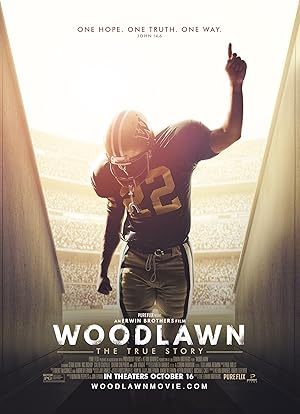
Woodlawn is one of the most explicitly Christian-worldview films produced in the modern era of faith-based cinema, centering its entire narrative on the transformative power of the gospel in the context of racial reconciliation. The film affirms that human dignity transcends race, that unity in Christ is not merely aspirational but achievable, and that forgiveness and love are the only lasting solutions to hatred and division. Tony Nathan's character arc models humility, courage, and grace under pressure — virtues the film rewards openly. The portrayal of desegregation-era Birmingham ensures the film does not flinch from the ugliness of racism, presenting it as genuine evil rather than a quaint historical misunderstanding. The film unambiguously affirms that good overcomes evil through Christ, and virtue — including Coach Gerelds' eventual spiritual transformation — is rewarded with meaningful change.
Content78As a PG-rated film, Woodlawn keeps its content largely appropriate for older children and families. There is racial violence depicted — including a school riot with fighting, shoving, and threat of serious harm — that, while not graphic, is intense and realistic enough to be unsettling for younger viewers. No sexual content is present, and there is no nudity. Language is mild to moderate, consistent with a PG rating, with occasional period-appropriate racial slurs used to convey the hostility of the era. There is no drug or alcohol use of note. The football scenes include hard tackles and competitive physicality but nothing gratuitous. The overall content profile is responsible and in service of the story's serious historical subject matter.
Moral Framework90The film presents an exceptionally clear moral framework in which racism is unambiguously identified as sin, and the cross of Christ is presented as the only sufficient answer to it. Characters who cling to prejudice are shown as diminished, isolated, or ultimately confronted with the poverty of their position. The coach's journey from skepticism to faith is handled with honesty — his reluctance is not mocked, and his transformation is earned. Tony Nathan's character is never allowed to be reduced to a symbol; he is shown as a person of genuine virtue whose suffering is taken seriously. Justice is not always swift or complete — the film acknowledges that racial wounds do not heal overnight — but the moral trajectory is unmistakably upward and grounded in recognizable truth.
Theological96Theological content is the heartbeat of this film, not a peripheral add-on. The revival scene in which nearly an entire football team responds to the gospel is depicted with emotional authenticity and doctrinal seriousness — the invitation is explicit, personal, and Christ-centered. Prayer is shown as genuine communion rather than cultural performance, and the film treats the conversion of individuals as the root of social transformation, a deeply biblical thesis. Sean Astin's portrayal of the chaplain presents evangelical Christianity as winsome, credible, and life-changing rather than coercive or simplistic. The film does not shy away from the ongoing cost of discipleship — following Christ does not remove hardship but reorients it. This is among the most theologically substantive treatments of Christianity in mainstream American cinema of its decade.
Woodlawn is a rare faith-based film that earns its theological weight through honest storytelling rather than sentimentality. Set against the turbulent backdrop of forced desegregation in early-1970s Birmingham, it presents the gospel of Jesus Christ as both personally transformative and socially revolutionary, and does so with sincerity and craft. It lands as one of the stronger entries in Christian cinema, though the racial violence and intensity of the historical setting make it better suited to older children and adults than to young kids.
⚠ Violence⚠ Mature Themes⚠ Frightening Scenes⚠ Positive Faith ThemesFull review →88/100

Frequently asked questions
What is the most accurate biblical movie?
Based on TheoScope's analysis, The King of Kings (2025) scores highest among biblical films at 89/100 for theological accuracy and faithful handling of Scripture.
Are biblical movies theologically faithful?
The King of Kings scored highest for theological faithfulness among biblical films reviewed by TheoScope. Accuracy to Scripture varies significantly — check full profiles before using in church or ministry contexts.
What historical Christian films are recommended?
The King of Kings (2025) scores 89/100 on TheoScope and is among the highest-rated historical and biblical films for Christian viewing and ministry use.
Browse other categories
See full scores, content flags & more
Free to browse. Sign up to unlock complete score breakdowns and the full TheoScope library.